Italian Historical Trademarks: a matter of national interest…?
27 Apr 2026 | Newsletter

In the light of its companies’ historic, long-standing heritage, Italy is trying to regulate specific legal instruments treating them as national strategic assets, both in relation to manufacturing and employment values and as connected to the Country’s international appeal. Reference is made to the distinct yet overlapping instruments of the “Historical Trademark of National Interest” and the more recent “Trademark of Particular National Interest and Value”. While these measures reflect an attempt to treat historical trademarks and undertakings as strategic assets, further harmonization with international IP principles and regulation remains essential to ensure legal certainty in the global market.
First was the so-called “Italian Historical Trademark of National Interest”, initially introduced under art. 11-ter of the Italian Code of Industrial Property (ICIP), by Decree-Law No. 34/2019, converted into Law no. 58/2019, providing that “the owners or exclusive licensees of trademarks registered for at least fifty years, or for which continuous use for at least fifty years can be proven, and used for the marketing of products or services manufactured by a national manufacturing enterprise of excellence historically linked to the national territory…”, may obtain the recordal of such trademark in a special register, kept by Italian Patents and Trademarks Office (UIBM).
Such a recordal grants the relevant undertaking:
- the right to use the following official logos (alongside its recorded trademark) for commercial and promotional purposes:
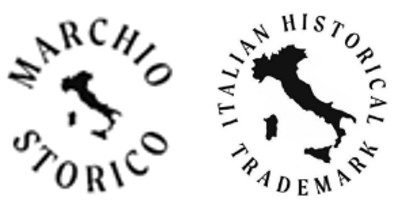
in relation to the products and services covered by the trademark recorded in the special register.
- the access to the Fund for Safeguarding Employment Levels and Business Continuity, both for the protection of employment in distressed companies, or (since this April 7, 2026) also for the acquisition of distressed companies with more than 20 employees by undertakings owning historical trademarks, provided they operate in the same or a homogeneous sector.
It is to be noted that the rule was at first accompanied by the provision (art. 185‑ter IIPC, later repealed by Decree‑Law 34/2020) of specific obligations imposed on proprietors of recorded historic trademarks of national interest, in the event of a business crisis, to notify the Ministry of Economic Development of the intention to cease or relocate their activity abroad, accompanied by a series of corresponding sanctions in the event of non‑compliance, and corresponding power for the Ministry of Economic Development to intervene through a specific fund, in order to safeguard employment levels and ensure continued production activity on national territory.
As mentioned, such a provision was repealed, but it now appears to have returned though a different and new instrument, with a broader scope of application, the so-said “Trademark of particular national interest and value” under Art. 7 of Italian Law no. 206/2023.
It is defined as a trademark registered for at least fifty years or, if unregistered, for which it is possible to prove continuous use for more than fifty years, that is significantly renown and is or has been used for the marketing of products or services manufactured by a national manufacture undertaking of excellence connected to the national territory (cf. art. 1, lett. f, of the Decree of the Ministry of Enterprises and Made in Italy of 3 July 2024).
The new measure introduces the possibility for the Ministry of Enterprises and Made in Italy (Mimit) to take over ownership of such trademarks of particular national interest and value where they have not been used for at least 5 years, or where the relevant undertaking intends to cease the manufacture activity relating to that trademark, meaning for cessation of activity “any type of procedure through which the manufacture concerning the products and/or services identified by the trademark in question, located in Italian territory, is discontinued” (cf. Ministerial Decree 3 July 2024).
In short, under this regime, two cases are envisaged:
- a) the undertaking that owns a trademark of particular national interest and value and intends to definitively cease the production activity relating to it, is required to notify the planned cessation of activity to Mimit at least 6 months in advance, with indicating in particular the economic, financial or technical reasons of the cessation. Following such notification, the Ministry may take over, free of charge, ownership of that trademark (provided it has not been transferred for consideration to third parties);
- b) for trademarks of particular national interest and value which Mimit presumes not to have been used for at least five years, the Ministry may file a request for revocation with the Italian Patent and Trademark Office and file a new application in the name of the Ministry itself.
The declared aim is to ensure the continuity and enhancement of these trademarks (and employment) in Italian territory. Accordingly, trademarks thus transferred/registered in the name of Mimit may be used by the latter, by means of a free licence agreement for a period of not less than ten years, solely in favour of (Italian or foreign) undertakings that intend to invest in Italy or to transfer to Italy manufacturing activities located abroad, with an obligation of the licensee to submit a half‑yearly report on compliance with such obligations.
Mimit publishes the trademarks for which it has acquired ownership as per above, in order to enable economic operators potentially interested in using such trademarks to submit their expression of interest.
The instruments between opportunities and critical issues
The measures show an attempt to safeguard corporate heritage, manufacturing skills and history of trademarks and undertakings as a sort of asset of strategic importance for the national interest. However, it raises some concerns, primarily due to the lack of coordination and harmonisation with international and European Union regulations and also due to interpretative issues in connection with the legal drafting concerning different instruments with overlapping definitions.