Old brands, new companies: when evoking the past misleads about the present
15 Jun 2026 | Newsletter

Court of Justice of the European Union, 26 March 2026, Case C‑412/24, Fauré Le Page Maroquinier SAS v Goyard St‑Honoré SAS, ECLI:EU:C:2026:250
Is a trademark evoking three centuries of artisanal heritage necessarily misleading when the company that owns it was incorporated barely fifteen years ago? On 26 March 2026, the Court of Justice of the European Union (CJEU) answered that question in the affirmative, holding that, in the luxury goods sector, a trademark incorporating a date from the distant past may mislead consumers by evoking centuries of accumulated know-how, regardless of whether any such know-how in fact exists. The ruling, delivered in Case C‑412/24, Fauré Le Page Maroquinier v Goyard St‑Honoré, arose from a dispute between two Parisian luxury leather goods brands and required the Court to clarify the scope of the deceptiveness ground for trademark invalidity.
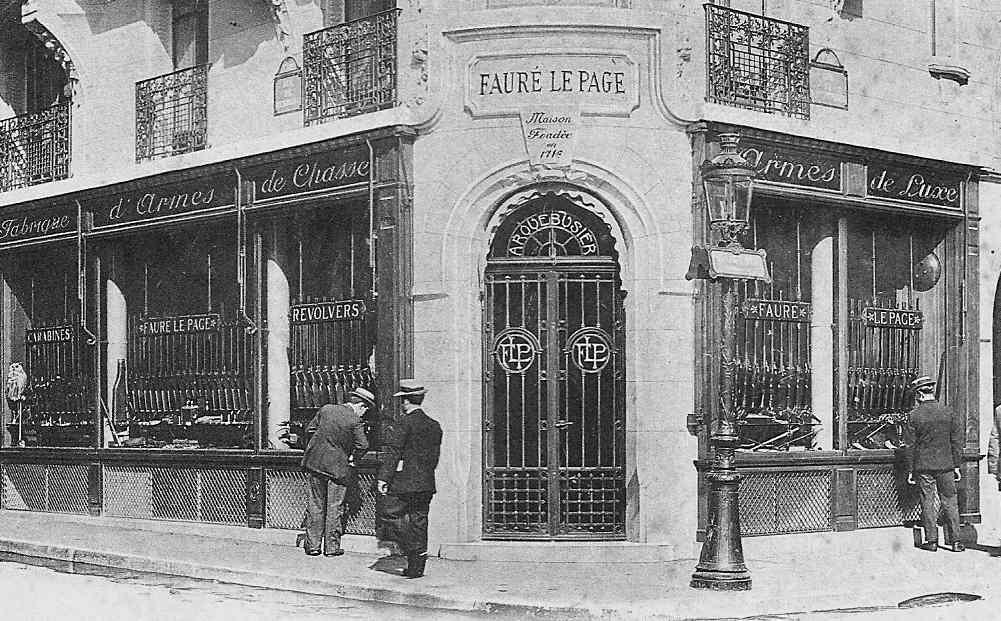
The factual background is the following. The historic Maison Fauré Le Page had traded in arms, ammunition and leather accessories in Paris as of 1716 until its dissolution in 1992, at which point all its assets were transferred to its sole shareholder, a company called Saillard. In 2009, Saillard assigned the “Fauré Le Page” trademark to a newly incorporated company, Fauré Le Page Paris. Two years later, Fauré Le Page Paris applied to register two French trademarks “Fauré Le Page Paris 1717”, designating, among others, leather goods, travelling bags and handbags. Goyard sought cancellation of those marks in 2012, contending in substance that the reference to 1717 misled consumers into believing that the business had been operating continuously since the 18th century and that the know-how accumulated over that period had been passed on to Fauré Le Page Paris, thereby conferring on its goods a quality and prestige derived from that long-standing tradition. Goyard was initially unsuccessful in its action, but after the French Supreme Court (Cour de cassation) quashed a first judgment of the Paris Court of Appeal in 2018, the latter upheld that action in 2021. Fauré Le Page Paris appealed to the Cour de cassation, which in 2024 referred three questions to the CJEU for a preliminary ruling.
The legal question at the heart of the reference was whether Article 3(1)(g) of Trademark Directive No. 2008/95 (now Article 4(1)(g) of Trademark Directive 2015/2436), which bars registration or provides for the invalidity of marks “of such a nature as to deceive the public, for instance as to the nature, quality or geographical origin” of the goods, extends to deception about the commercial history of the trademark’s proprietor. That provision had previously been interpreted by the Court in its judgment of 30 March 2006, Elizabeth Emanuel v Continental Shelf 128 Ltd (Case C‑259/04, ECLI:EU:C:2006:216). In that case, a well-known fashion designer had assigned her own name as a registered trademark to a company with which she subsequently ceased to be associated. The CJEU held that the name “Elizabeth Emanuel” could not, in itself, be considered deceptive within the meaning of that provision. While the Emanuel case did not directly address the question at stake, the Cour de cassation considered it could be interpreted as meaning that the deceptiveness ground presupposes that the misleading character of the mark should affect the product it designates, not merely the identity or attributes of the proprietor. That distinction between product-related deception and owner-related deception formed the baseline from which the Cour de cassation sought guidance in the present case.
The CJEU held, based on the wording of Article 3(1)(g) (which contains an illustrative list of characteristics of goods or services) and on its objective (which is to target deception inherent in the sign), that deception solely as to the year or place of establishment of the proprietor, taken in isolation, does not trigger the deceptiveness invalidity ground, since the characteristics of the proprietor are not characteristics of the goods. However, the Court went on to state that the Court of Appeal of Paris ‘also found that [the] goods fall within the luxury leather goods sector, that the contested marks are perceived by the relevant public as claiming, incorrectly, that their proprietor has been active in that sector for several centuries and that the incorrect information thus conveyed is liable to influence the decision of consumers to purchase goods bearing one of those marks, since consumers of luxury leather goods attach importance to the history and age of the undertaking which markets them and infer from these that those articles have a particular level of quality and prestige’. The CJEU also recalled the principle established in its judgment in Copad (Case C‑59/08, 23 April 2009), that the quality of luxury goods is not confined to their material and objective characteristics but may also result from their allure and prestigious image. Building on these findings, the CJEU concluded in substance that, in such a context, ‘the existence of actual deceit or a sufficiently serious risk that the public will be deceived, within the meaning of [Article 3(1)(g)], may be found where such long-standing know-how and, accordingly, the guarantee of quality and prestigious image associated with or resulting from it do not actually exist’.
The main lesson of the ruling lies primarily in the clarification it brings to the articulation between owner-related and product-related deception. The present case confirms that, as a principle, misleading the public about the proprietor is not, in itself, sufficient to render a mark deceptive, but states that this may be different where information about the proprietor simultaneously conveys a message about the goods themselves.
Although this principle may look straightforward in theory, its application may not be so easy in practice. Thus, in the Emanuel case, the CJEU had recognized that the average consumer might be influenced in their act of purchasing a garment bearing a trademark corresponding to the name of a designer, by imagining that the designer was involved in the design of that garment. The Court nevertheless held that such a mark may not, by reason of that particular feature alone, be refused registration on the ground that it would deceive the public, within the meaning of Article 3(1)(g). Therefore, the fact that the consumer’s purchasing decision may be influenced by an incorrect perception, may not be always decisive and the weight of this criterion may vary depending on the specific circumstances of the case.