Overcoming poverty as the technical problem to be solved by humankind
16 Sep 2026 | Newsletter

Intellectual and Industrial Property is usually seen as a tool for protecting innovation and promoting creativity. However, usually during the daily work of prosecuting trademark or patent applications, or discussing amendments to the laws, we may forget a very relevant purpose: IP is a tool for helping to overcome poverty.
From the perspective of the necessities of humankind, the Patent System classifies all the problems according to the International Patent Classification (IPC) System. We usually care about health, environment, and solutions for agriculture, among others. However, we can ask if there is an IPC for poverty.
The potential reasons why a country is underdeveloped from the economic perspective are plenty. Despite any of those reasons, poverty should always be considered as one of the most relevant technical problems of humanity. The Patent System can deeply contribute to solving this problem.
From the historical perspective, we can see that there is a correlation between the development of a country and the strength of its system to protect Intellectual Property. One of the relatively recent examples of that is, for example, how China has evolved from a complex period of hunger to become one of the most relevant countries regarding the filing of patent applications worldwide. Nowadays, China has realized that to innovate is equivalent to protecting the related IP, or in other words, there is no innovation if it is not sufficiently protected (and enforced).
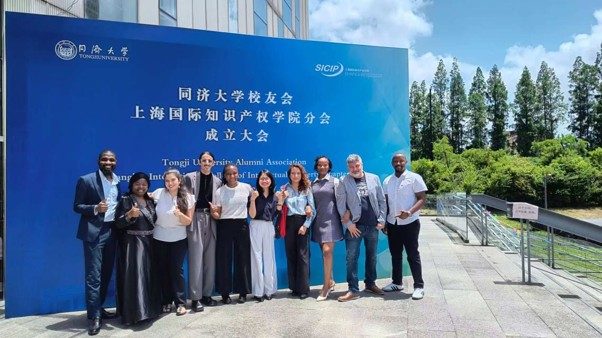
As a Chilean patent agent that prosecutes patents in the biotechnology field, I have had the experience of studying for a Master´s degree in Intellectual Property in Shanghai, China, during 2025-2026 at Tongji University – SICIP (Shanghai International College of Intellectual Property), thanks to the invitation made by the Chinese Patent and Trademark Office (CNIPA) and the Chilean PTO – INAPI, and the support of Villaseca Abogados (Chile). For one year I had the opportunity to meet people – now all good friends – from all over the world: China, Sri Lanka, Russia, Botswana, Nigeria, Malawi, Indonesia, South Africa, Colombia, Nepal, Tajikistan, Azerbaijan, Cambodia, Kenya and Ghana. One thing in common in all my “IP friends” is the eagerness to keep learning about how to protect creativity, innovation, and promote the development of their own countries.
I would like to recall the story of my friend Meth from Sri Lanka. He told me how he used to work in paddy fields with his father when he was a kid, and how he struggled to earn the daily living. Then, when he was 13 years old, he became an inventor and created an instrument like a caliper to measure the inner diameter of bottles. He even filed a patent application and got it patented. Later on, he became a professor and decided to help Sri Lanka´s students to realize that they can invent things, but to do so they needed to find relevant problems.
Overall, my friends helped me to realize that there is a general lack of IP awareness in most of the societies in all countries. If we think about this question: how old were you when you heard for the first time that there existed something called Intellectual Property? In my case, it was when I was around 21 years old, at the university. However, if we consider that all of the innovations one day will fall in the public domain, then the Patent System can truly contribute to building a strong treasure box that is capable of guarding all the solutions previously found by the former generations.
Currently, as engineers, lawyers or OTLs, we all have the duty to contribute to the protection of innovations by means of good quality patents. No matter if you are a patent agent/attorney or patent examiner, the prosecution of a patent case should be handled with the as much care as possible: you are handling the product of the effort of scientists or inventors that have struggled a lot to reach the invention that is now in your hands, and compliance with the legal requirements should be ensured by all of the IP players. We want to produce good quality patents so that, hopefully, a prosperous business will be built based on said application, a company will arise, jobs will be created, taxes will be paid, and most importantly: a technical problem that was affecting us will be solved.
We must give IP protection the relevance it deserves in society. To do so, IP awareness can be – and should be – improved by educating young students at the school level. If more people can know at earlier stages of life that there is something called IP, then they will realize earlier that they can copy and use everything that belongs to the public domain, or to collaborate when the inventions are protected in their countries.
We need to be responsible for what tools we will be giving to the next generations. Intellectual property protection cannot only save humankind from hunger, diseases, or poverty, but it can save our lives and dignity as human beings.