Reform of the Japanese Patent Linkage System
27 Apr 2026 | Newsletter

Summary
Historically, Japan’s patent linkage system was governed by an administrative notification issued in 2009, often referred to as the “Two Directors’ Notification”. While this system served to ensure a stable supply of medicines by preventing the market entry of infringing generics, it faced criticism for its lack of formal legal basis and transparency. Against the backdrop of the landmark Toray v. Sawai & Fuso decision in May 2025 — which awarded a record-breaking ¥21.7 billion in damages — the Japanese government has significantly overhauled the system. This article analyzes the dual reforms introduced in late 2025: the formalization of biosimilars into the linkage framework and the trial of a new “Expert Committee” system.
- Formalization of the System and Inclusion of Biosimilars
On October 8, 2025, the Ministry of Health, Labour and Welfare (MHLW) issued a new notification that effectively replaced the 2009 framework.
Key updates include:
- Formal Inclusion of Biosimilars: While biosimilars were previously handled “in accordance with” the generic rules, they are now explicitly and formally included in the patent linkage system.
- Clarified Reporting Obligations: Patent holders or originators must now submit a “Patent Information Reporting Form” for relevant substance or use patents before the re-examination period of the originator drug ends.
- Effect of Non-Reporting: Patents that are not reported via this form will, in principle, not be considered during the approval review of follow-on products.
- The Expert Committee System: Enhancing Neutrality
Following the October reform, the MHLW introduced a trial “Expert Committee System” on November 14, 2025. This system aims to provide the MHLW with neutral, expert opinions on whether a follow-on drug potentially infringes an existing patent during the regulatory review process.
Operational Structure of the Committee
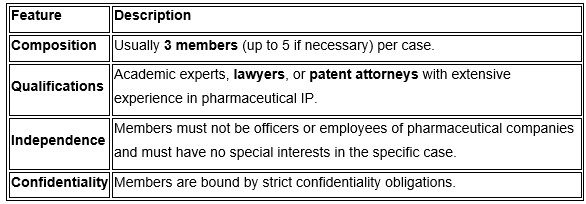
The Process:
- Designation: The MHLW designates specific products under review for expert consultation.
- Notification: Both the follow-on applicant (“Generic Company”) and the originator are notified.
- Submission: Parties have 30 business days to submit materials, including expert opinions, trial results, or court judgments.
- Opinion: The committee reviews public and submitted documents and materialsto assess infringement risk and submits a written opinion to the MHLW.
- Practical Implications and the “Substantial Identity” Doctrine
The importance of these reforms is underscored by the IP High Court’s May 2025 decision in the Toray case. In that ruling, the court applied the doctrine of “substantial identity” to find that, even though the generic drug was different from the brand name drug in additives, the generic drug fell within the scope of the originator’s extended patent for second medical use patent (* the formulation type of the generic drug was the same as that of the originator’s drug). .
The new Expert Committee is expected to navigate these complex technical and legal boundaries—such as the “Scope of PTE” and “Period of PTE”—to provide more predictable outcomes before products reach the market. This is critical as statistical trends show that court judgments in Japan are increasingly resulting in high-value awards exceeding ¥100 million.
Conclusion: Strengthening the Enforceability of Patent Rights
The 2025 reforms represent a shift toward a more transparent and objectively grounded patent linkage system in Japan. By involving neutral patent experts and formally including biosimilars, the MHLW aims to mitigate the risk of post-approval litigation, which has become increasingly costly for generic manufacturers.
Companies operating in the Japanese market should ensure their patent information reporting is timely and comprehensive, as the MHLW’s reliance on these experts will likely shape the landscape of pharmaceutical competition for years to come.