Trademarks and Parody: Jack Daniel’s Revisited
16 Sep 2026 | Newsletter

On 4 August 2026, the U.S. Court of Appeals for the Ninth Circuit reversed the 23 January 2025 decision of the trial court, the U.S. District Court for the District of Arizona, in the long-running trademark litigation between Jack Daniel’s Properties, Inc. (“Jack Daniel’s”), and VIP Products, LLC (“VIP”):
https://law.justia.com/cases/federal/appellate-courts/ca9/25-2027/25-2027-2026-08-04.html
The litigation arose in 2014 from VIP’s sales of a poop-themed BAD SPANIELS dog toy designed to imitate and spoof the JACK DANIEL’S whiskey brand and trade dress:
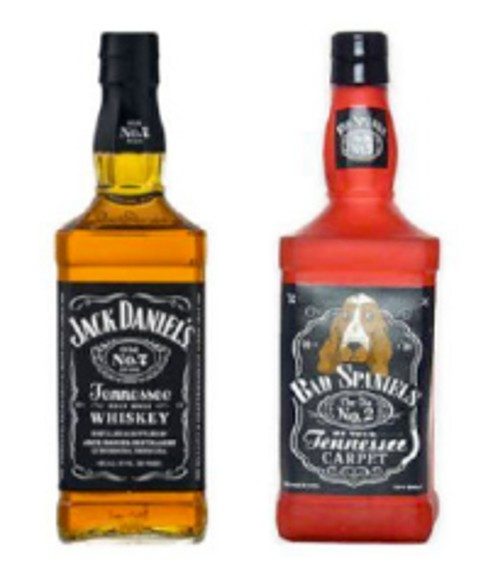
For a discussion of the 23 January 2025 district court decision (including the case’s earlier trip to the Supreme Court and back) see the 21 March 2026 AIPPI Newsletter, https://www.aippi.org/news/trademarks-parody-and-the-first-amendment/. In short, the district court held against Jack Daniel’s, and in favor of VIP, and dismissed the trademark infringement claims, basically on the ground that the parodic nature of VIP’s product had a humorous effect that prevented any likelihood of confusion as to source or origin. However, the district court held in Jack Daniel’s favor, and against VIP, on the trademark dilution by tarnishment claims, and enjoined VIP from selling its BAD SPANIELS product. VIP appealed its loss on dilution to the Ninth Circuit. Jack Daniel’s did not appeal its loss on infringement.
The Ninth Circuit’s analysis turned less on the important role of parody as free speech, than on a very precise examination of exactly which Jack Daniel’s marks were “famous,” as required by the dilution statute, and whether those specific marks were tarnished and diluted by VIP’s dog toy branding. The court found that only the JACK DANIEL’S mark and the company’s registered trade dress were famous. And when BAD SPANIELS was compared to the famous JACK DANIEL’S trademark, the court found it was not disparaging, or tarnishing, or scatological on its face. Jack Daniel’s had presented expert witness testimony that the canine excrement associations, in context, had impaired its core brand values. However, the court did not give that testimony great weight, in part because the expert had not conducted a specific study on whether the BAD SPANIELS dog toy itself created harmful associations with the Jack Daniel’s trademarks.
The court also found that no disparagement or tarnishment resulted from VIP’s simulations of elements of Jack Daniel’s’ registered trade dress, which included the three-dimensional square-shaped bottle, the arched JACK DANIEL’S logo, stylized label, and filigree. Just because JACK DANIEL’S was a famous mark, the court reasoned, it did not necessarily follow that every other element on the labeling was also a famous mark protected by the dilution statute. VIP had replaced “Old No. 7” with “Old No. 2,” which did imply defecation, but it did not mean OLD No. 7 was a famous trademark. Similarly, replacing “Tennessee whiskey” with “Tennessee carpet” was not tarnishment of a famous mark. And replacing Jack Daniel’s’ standard alcohol-by-volume language with “43% POO BY VOL.,” and “100% SMELLY” was held not to be tarnishment of a famous trademark.
In sum, Jack Daniel’s trademark infringement and trademark dilution claims against VIP’s BAD SPANIELS dog toy stand rejected. It remains to be seen whether Jack Daniel’s will try to appeal the Ninth Circuit’s latest decision to the Supreme Court. Such an appeal would not be accepted as a matter of right. Hearing the case would be accepted or declined at the discretion of the Supreme Court, which has already ruled on other aspects of the case.